
LendKoPH Helps Philippine Lenders Run Loans, Collections, and Compliance in One Place
LendKoPH gives Philippine lending and financing companies a focused way to manage loans, collections, accounting books, and BIR and SEC compliance without relying on spreadsheets.
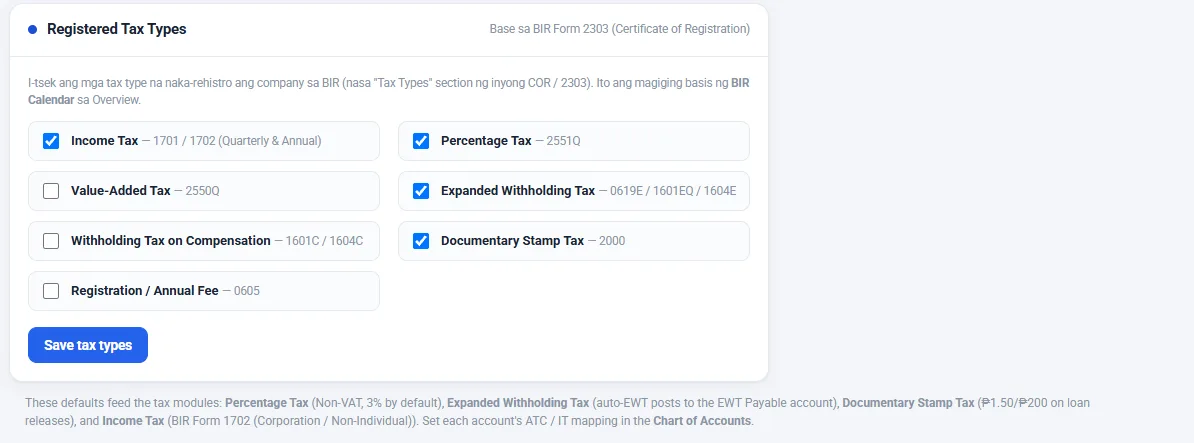
LendKoPH is built for a very specific kind of business, and that specificity is what makes it interesting. The app is lending and accounting software for Philippine lending and financing companies, with tools for monitoring loans, managing collections, keeping books current, and staying ready for BIR and SEC requirements. Instead of presenting itself as a general finance dashboard, it speaks directly to the daily work of lenders who need operational records and accounting records to stay aligned.
That focus matters because lending work can quickly become fragmented. A company may need one place to release loans, another place to track payments, another spreadsheet for overdue accounts, and still another accounting process for journals, ledgers, statements, and compliance schedules. LendKoPH tries to bring those pieces together so the business can spend less time reconciling scattered records and more time running the lending operation with a clearer view of what is happening.
Built Around the Loan Lifecycle
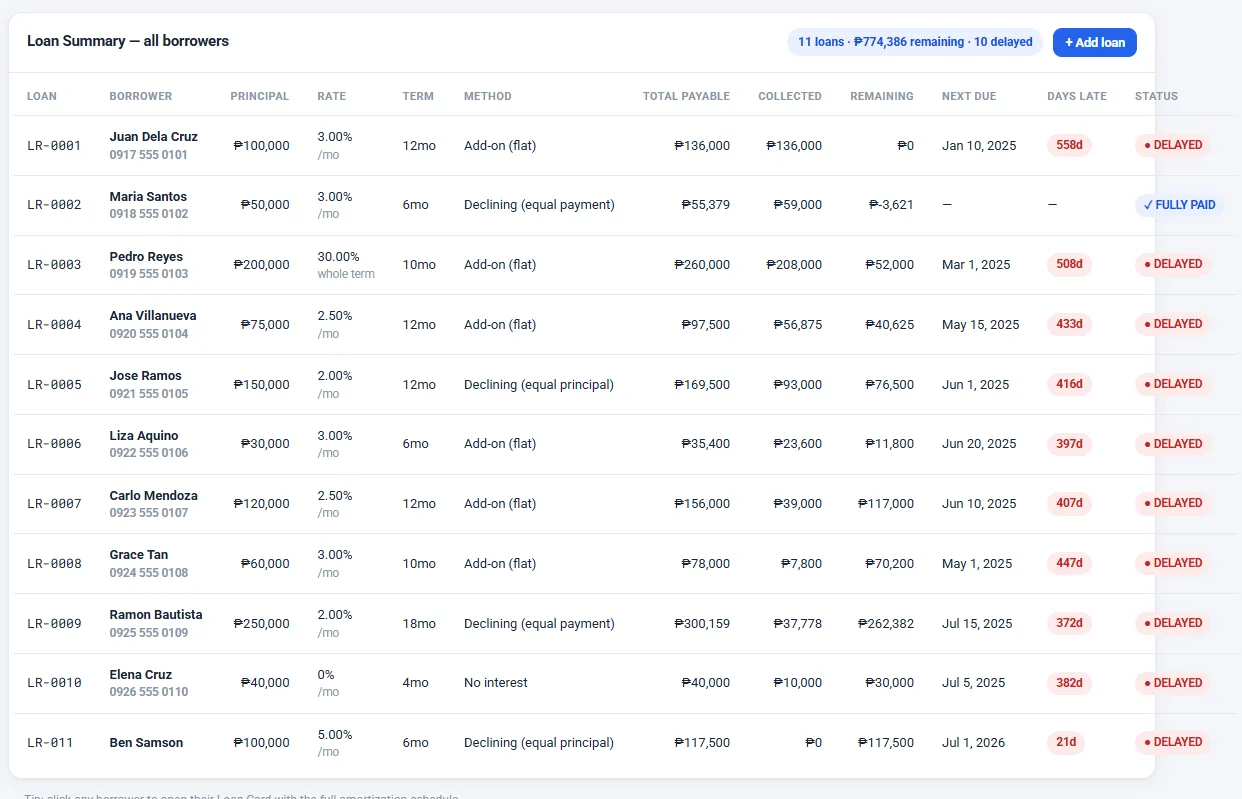
The listing describes support for the full loan lifecycle, beginning with loan releases and clear amortization schedules. That is a practical starting point. Lending depends on shared clarity: what was released, what the borrower owes, when payments are expected, and how the obligation changes over time. By putting amortization schedules into the workflow, LendKoPH gives the business a more structured basis for tracking each account from the beginning.
The same practical thinking appears in payment recording. LendKoPH automatically splits recorded payments across principal, interest, penalties, and documentary stamp tax. That is a small phrase with a lot of operational weight behind it. For a lender, a payment is not always just one simple number. It has to be understood correctly in the loan record and reflected correctly in the accounting books. Automating that split can reduce repeated manual work and help keep records more consistent.
Collections With Better Visibility
LendKoPH also gives attention to overdue accounts through PAR aging. For lending and financing companies, collection work depends on knowing which accounts need attention and how risk is developing over time. A clear view of portfolio-at-risk aging can help a team understand where to focus follow-ups and how overdue balances are moving.
This is where the app feels grounded in the realities of the business. Collections are not only about reminders or payment entries. They require an organized view of accounts, timelines, and aging. By including PAR aging as part of the workflow, LendKoPH connects loan monitoring with the kind of operational visibility that lenders need when accounts become overdue.
Accounting That Follows the Work
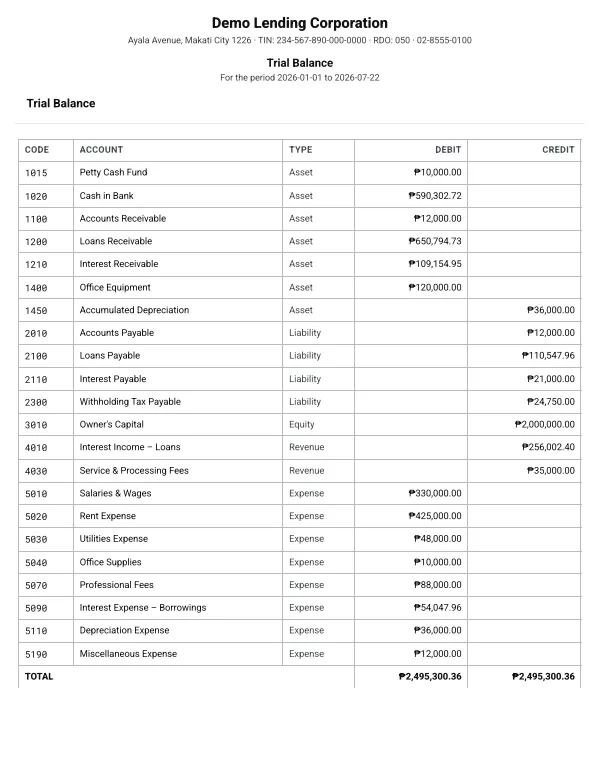
One of the strongest details in the listing is that every posted transaction flows into double-entry books. That connects the front-office lending activity with the accounting records behind it. Cash Receipts and Disbursement Journals, the General Ledger, financial statements, and BIR and SEC schedules stay current without extra data entry.
That promise is easy to appreciate. When accounting has to be reconstructed after the fact, the cost is not only time. It can also create uncertainty about whether records match the actual loan activity. LendKoPH takes a more integrated approach: as the business records transactions, the books move with the work. For teams that have been relying on spreadsheets, that can make the whole operation feel more controlled and less fragile.
Designed for Philippine Compliance
LendKoPH is clearly shaped around the Philippine context. The tagline mentions BIR and SEC-ready books for PH lenders, and the description includes built-in BIR and SEC compliance calendars. Those details make the product feel locally aware rather than generic. Lending and financing companies do not only need records for internal use; they also need to keep filings and schedules on time.
The compliance calendar is a thoughtful part of that workflow. Filing obligations are easy to miss when they sit outside the system where the day-to-day business is being managed. Bringing compliance reminders closer to lending and accounting activity makes the app more useful as an operating tool, not just a record keeper.
A Better Alternative to Spreadsheet Sprawl
The line “Run your lending business — hindi ang spreadsheets” gives LendKoPH a clear personality. It understands the familiar problem: spreadsheets are flexible, but they can become the business itself when too many critical processes depend on them. For a lending company, that can mean duplicated entry, version confusion, delayed reports, and extra effort whenever records need to be checked.
LendKoPH offers a more focused path. It combines loan releases, amortization schedules, payment recording, overdue-account tracking, double-entry accounting, reports, and compliance calendars in one web-based product. The app is listed as freemium and free during beta, which makes it approachable for lenders who want to see whether a dedicated system can replace a patchwork of manual workflows.
What stands out most is how coherent the product feels. Each feature points back to the same goal: helping Philippine lenders manage the financial and administrative side of lending with cleaner records and fewer disconnected tools. For lending and financing companies that want their operations, collections, books, and compliance work to stay in step, LendKoPH makes a strong and practical case.
View LendKoPH on App Builders PH
LendKoPH · image 1
LendKoPH · image 2
LendKoPH · image 3