
Buzyness Gives Multi-Business Owners One Dashboard for Sales, Expenses, and Profit Margins
Buzyness brings sales, expenses, overheads, and net profit margins from multiple businesses into one privacy-conscious financial dashboard for operators managing several brands.
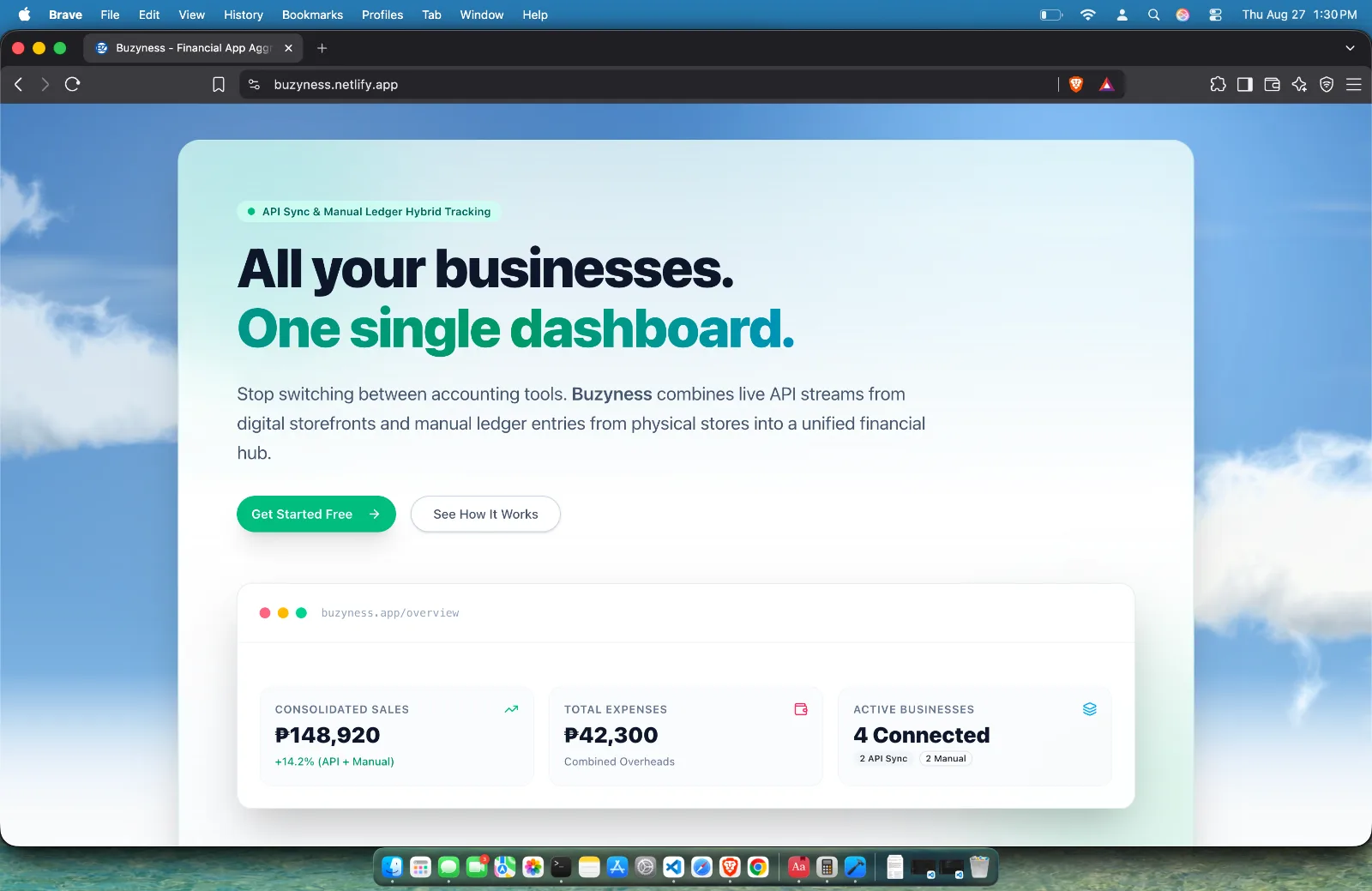
Buzyness is built for people who are trying to keep more than one business in view at the same time. Its promise is direct: all your businesses, one single dashboard. For operators who manage several brands, digital storefronts, or a mix of online and offline activity, that kind of consolidation can be genuinely useful. The app focuses on the financial pulse of a portfolio: sales, expenses, overheads, revenue streams, and net profit margins, gathered into one place instead of scattered across separate tools.
What makes Buzyness interesting is that it is not trying to become a full accounting suite or a generic spreadsheet replacement. The listing describes a central financial dashboard for multi-app operators and business owners, with a practical emphasis on visibility. It gives managers a way to understand how different businesses are performing, how overheads are affecting the bigger picture, and where the portfolio stands overall. That is the sort of view that becomes harder to maintain as a builder or founder moves from one product to several.
A Portfolio View for Real Operations
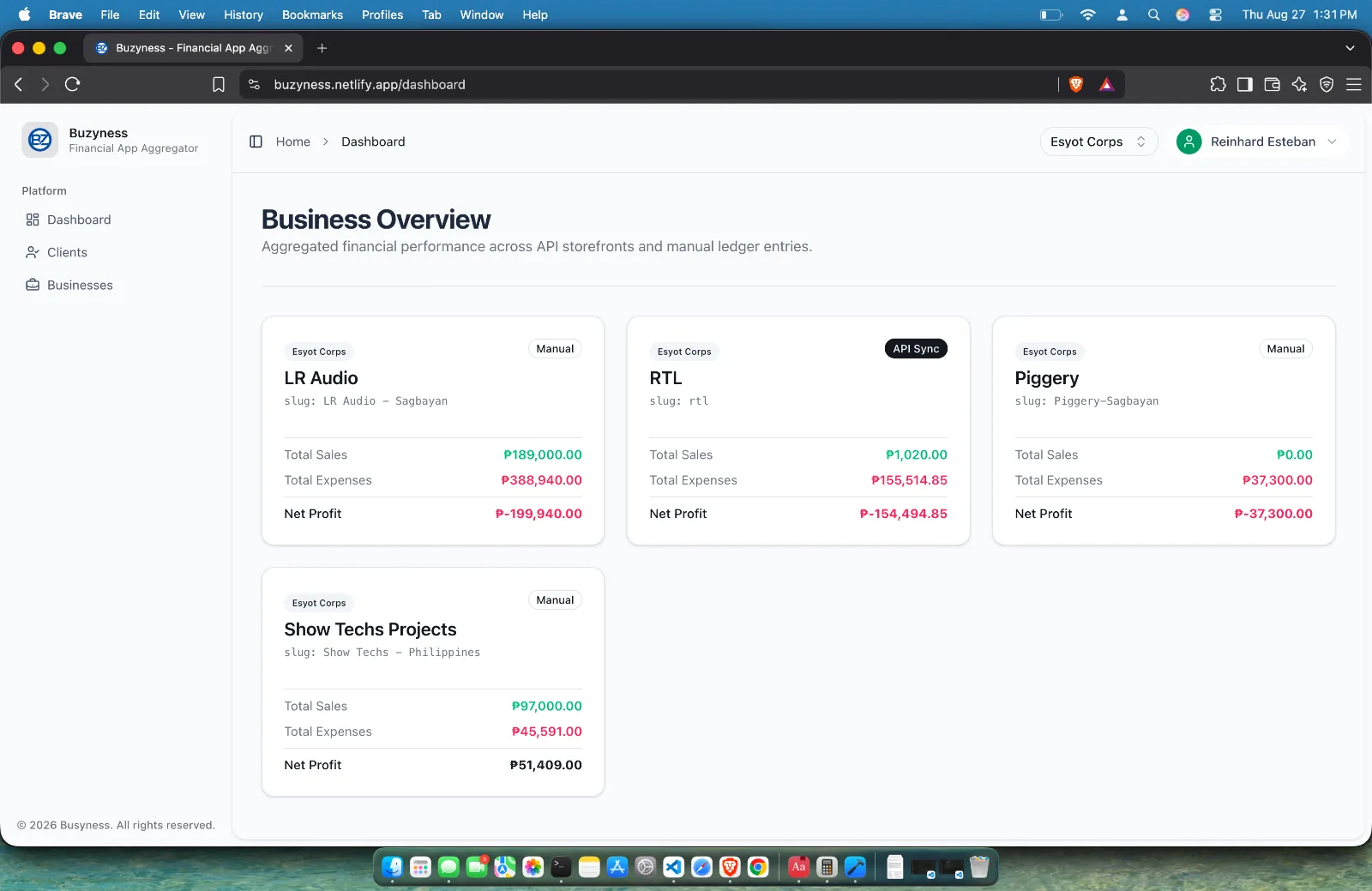
The strongest idea in Buzyness is the consolidated overview. A single business already creates enough financial data to track carefully. Multiple businesses multiply that work, especially when each one has its own sales channels, expense categories, and reporting habits. Buzyness gives operators a shared dashboard where revenue streams, overheads, and margins can be watched together, making the whole operation easier to scan.
That matters because business owners often need both the individual story and the combined story. One brand may be growing quickly while another is absorbing more overhead. A digital storefront may be producing steady sales while offline activity needs more manual logging. The value of Buzyness is in making those pieces visible side by side, so the owner is not forced to jump between disconnected views just to understand the current state of the business.
Manual Logging and API Data Together
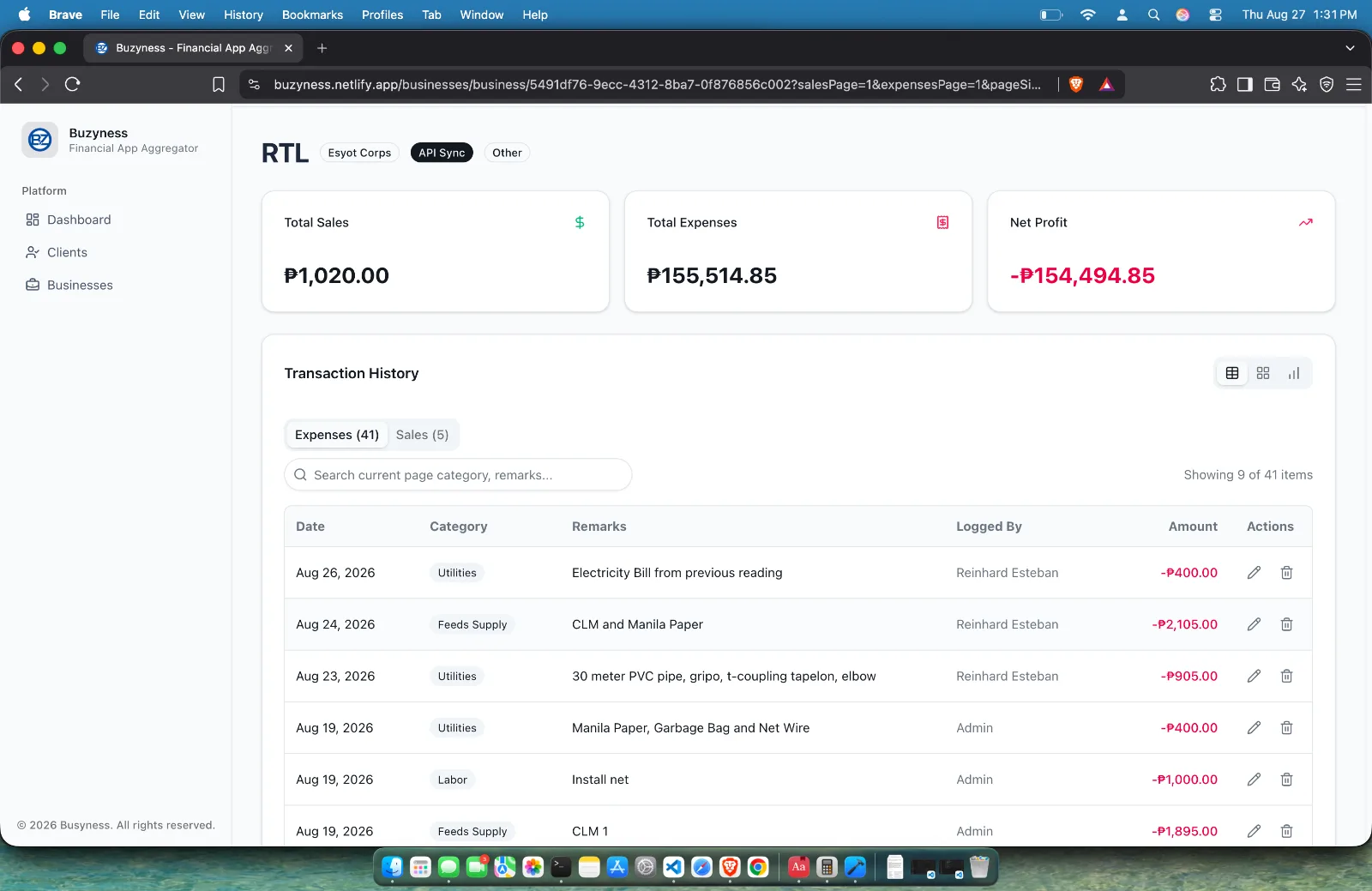
Buzyness uses a hybrid tracking model, and that detail gives the product a lot of practical range. For digital storefronts, it can stream real-time data through read-only APIs. For offline brick-and-mortar sales, cash expenses, store overheads, and other manual activity, it supports modal forms with category tagging. That combination feels thoughtful because real businesses rarely fit neatly into one data source.
The per-business setup is especially useful. The listing says users can choose and switch between manual entry or API integration for each business as operations scale. That means a founder does not have to force every brand into the same workflow on day one. A newer business can start with manual logging, while a more mature digital storefront can connect through read-only API endpoints. As the portfolio changes, the tracking method can change with it.
Privacy Built Into the Shape of the Product
One of the most reassuring details in the listing is the privacy-first approach. Buzyness pulls only aggregated financial metrics, leaving internal codebase logic and customer databases untouched. That is an important boundary for operators who want better visibility without giving a dashboard unnecessary access to sensitive systems.
Read-only APIs also fit that mindset. They allow the dashboard to receive performance data without becoming a tool that can alter the connected business. For founders and business owners, that separation can make the idea of connecting data sources feel more reasonable. The app is asking for the information it needs to create a financial overview, while keeping deeper operational systems outside its reach.
Built for Fast Check-Ins
The modal forms described in the listing suggest that Buzyness is designed for regular, lightweight updates. Managers can record cash expenses, overheads, and offline transactions on the fly, using category tags to keep the information organized. That is a practical pattern because financial tracking often succeeds or fails based on how easy it is to keep the records current.
If an expense takes too much effort to log, it may be skipped until later. If offline sales live in a separate notebook or spreadsheet, the dashboard becomes incomplete. By giving manual entries a clear place inside the same system as automated digital data, Buzyness makes the portfolio view more dependable. The app is not only collecting convenient API data; it is also making room for the messy parts of business that still happen away from a storefront integration.
Why Buzyness Stands Out
Buzyness leaves a clear impression because it understands the friction of managing several businesses at once. The pain is not only that numbers exist in many places. It is that decisions become slower when the owner has to assemble the picture manually every time. A dashboard that combines sales, expenses, overheads, and margins across brands can make the business feel more legible.
The app is listed as free, web-based, and focused on business aggregation. Those choices make it easy to understand who it is for: operators who need a secure, simple way to monitor several revenue streams without constantly switching between accounting tools and storefront dashboards. The hybrid model gives it flexibility, and the privacy-first design gives it a sensible operating boundary.
For multi-business owners, Buzyness offers a practical kind of calm. It gives the portfolio one place to report back, whether the data comes from read-only APIs or quick manual entries. That makes it a useful dashboard for builders and operators who want to spend less time gathering numbers and more time understanding what those numbers are saying.
View Buzyness on App Builders PH
Buzyness · image 1
Buzyness · image 2
Buzyness · image 3
Buzyness · image 4